
How to Wash a Jacket and Keep Its Shape
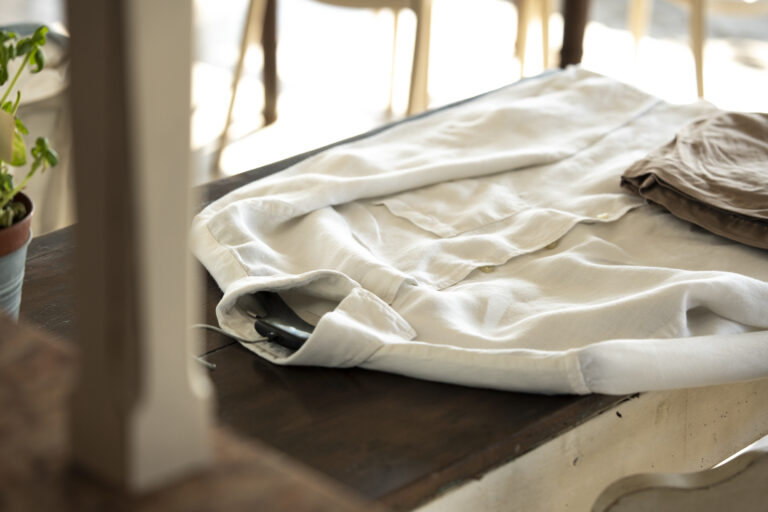
Most of the damage happens after the wash, not during it.
A jacket is not a t-shirt with sleeves. It has hardware, a lining, structured shoulders, and often a shell finish, and every one of those reacts differently to hot water and tumbling. The good news is that outerwear needs washing far less often than the layers underneath it. The bad news is that when it does, the usual laundry habits are what cause the damage.
Wash It Less Than You Think
Outerwear sits over other clothes, which means it rarely touches skin for long. Unless something spilled on it, a jacket does not need a full wash at the end of a week. Airing it overnight on a wide hanger deals with most of what a wash would, and skips the wear entirely.
What does need regular attention is the collar and the cuffs. Those are the two places skin actually makes contact, and they grey long before the rest of the garment does. Spot cleaning them with a damp cloth and a small amount of detergent keeps a jacket out of the machine for months.
Before It Goes In
Close every zipper, including the pockets. An open slider dragging against fabric for a full cycle abrades whatever it touches, and an open pocket collects lint and grit that then works into the seams. Fasten snaps for the same reason.
Empty the pockets properly. A pen that survives a wash cycle costs you the jacket, and a forgotten key is exactly what tears a pocket bag at the corner. Then turn the garment inside out so the abrasion lands on the lining rather than the face fabric.
Detergent and Water
Use less detergent than the cap suggests. Residue that does not rinse out sits in the weave, stiffens the fabric, and attracts dirt faster afterwards. Skip fabric softener entirely on outerwear: it coats fibers and flattens the loft that keeps a vest warm.
Cool water and a gentle cycle. Heat is what shrinks a lining at a different rate than the shell, and once those two layers disagree about their size, the jacket puckers along the seams and never fully recovers.
Drying Is Where Shape Is Won or Lost
A jacket dried on a thin wire hanger dries into the shape of that hanger, with a dent pressed into each shoulder. Use a wide wooden or padded hanger instead, zip it halfway to hold the front aligned, and let it dry at room temperature away from a radiator or direct sun.
Vests are more forgiving because they carry less weight, but the same principle applies: hang from the shoulders, not from a loop at the neck, which drags the whole garment down through one point.
Storage Between Seasons
Store outerwear clean and completely dry. Anything put away with a trace of body oil on the collar comes back with a mark set into it, and anything put away slightly damp comes back smelling of the closet. Hang rather than fold where you have the space, and leave room on either side so the garment is not compressed flat for months.
When Cleaning Is Not the Answer
A slider that no longer locks the teeth, a cuff that stays flared instead of returning to shape, or a lining separated from the seam under the arm are all wear rather than dirt. No wash cycle fixes any of them.
If a jacket arrived with a fault rather than earning one, that is covered by our Return & Refund Policy. And if you are choosing your next one, the checks we run before anything is listed are described on our About Us page.
Thank you for shopping with us, and for finding a jacket you actually keep by the door.