
How to Tell a Zipper Will Last
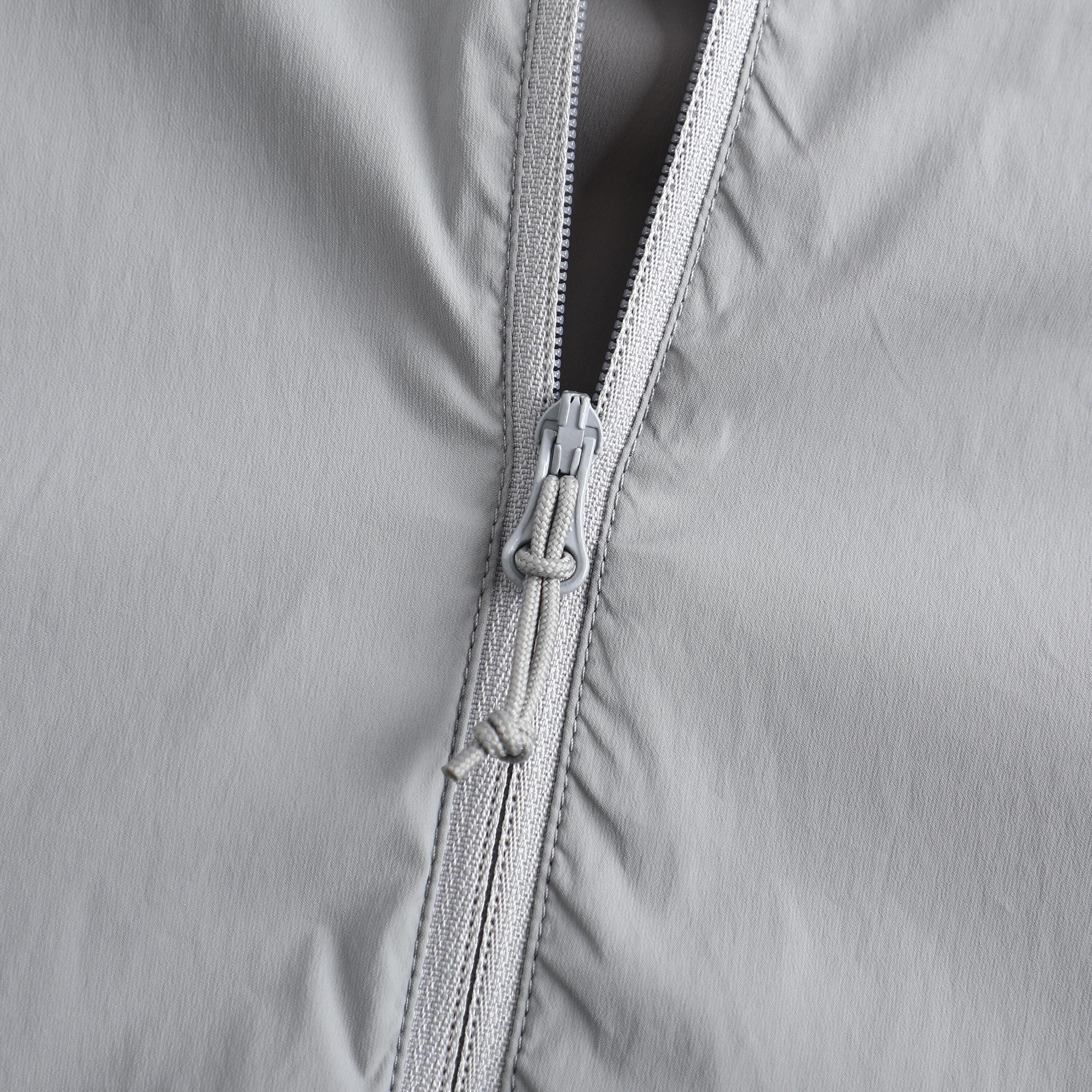
Outerwear rarely dies of fabric failure.
Ask someone why they stopped wearing a jacket and the answer is almost never that the fabric wore through. It is that the zipper stopped closing reliably, and a jacket that will not close is a jacket that stays on the hook. Learning to read a zipper before buying is a small skill with a large payoff.
Teeth: Molded, Coil, or Metal
Coil zippers use a continuous spiral of nylon. They are flexible, light, and self-healing to a degree, which makes them good for pockets and soft shells. Molded plastic teeth are chunkier and hold alignment better under load. Metal teeth are the most durable and the least forgiving, since a bent tooth stays bent.
None of the three is automatically better. What matters is the match: a heavy shell with a light coil zipper at the front is the combination that fails first, because the zipper is carrying more tension than it was chosen for.
The Slider Is the Part That Actually Fails
Teeth rarely break. Sliders spread. Over time the metal body opens slightly, and once it does, the teeth pass through without locking together, so the zipper separates behind the slider as it travels up. That is the classic symptom of a worn zipper, and it is a slider problem rather than a tooth problem.
A slider worth trusting feels solid rather than hollow, has a visible auto-lock mechanism at the pull, and does not rattle loosely when you shake it. Weight is a fair proxy here: a slider that feels like nothing usually is.
The Box and Pin at the Bottom
The bottom of a front zipper, where the pin seats into the box, takes the whole load of getting the jacket started. Check that the pin slides in without hunting for the slot and that the box is reinforced into the seam rather than sitting on a flap of loose fabric. This is where a cheap front zipper gives itself away.
How It Is Sewn In
Run a finger along the zipper tape from the inside. It should be stitched flat into the seam, with even stitch spacing and no puckering along its length. Wavy tape means the zipper was sewn in under tension, and that tension will keep pulling at the same point until something gives.
A storm flap over the zipper is a good sign for a different reason: it keeps wind and grit off the teeth, and grit is what grinds a slider open faster than use alone.
The One-Hand Test
The simplest check needs no knowledge at all. Hold the jacket by the collar and run the zipper up with one hand. If you have to steady the hem with the other hand to stop it snagging, the zipper is either too light for the fabric or badly set in. A well-matched front zipper runs cleanly with one hand.
These are the same checks we run before a jacket goes into the range, which is described on our About Us page. If a zipper fails after you receive it rather than before, that is covered by our Return & Refund Policy.
Thank you for shopping with us, and for finding a jacket you actually keep by the door.